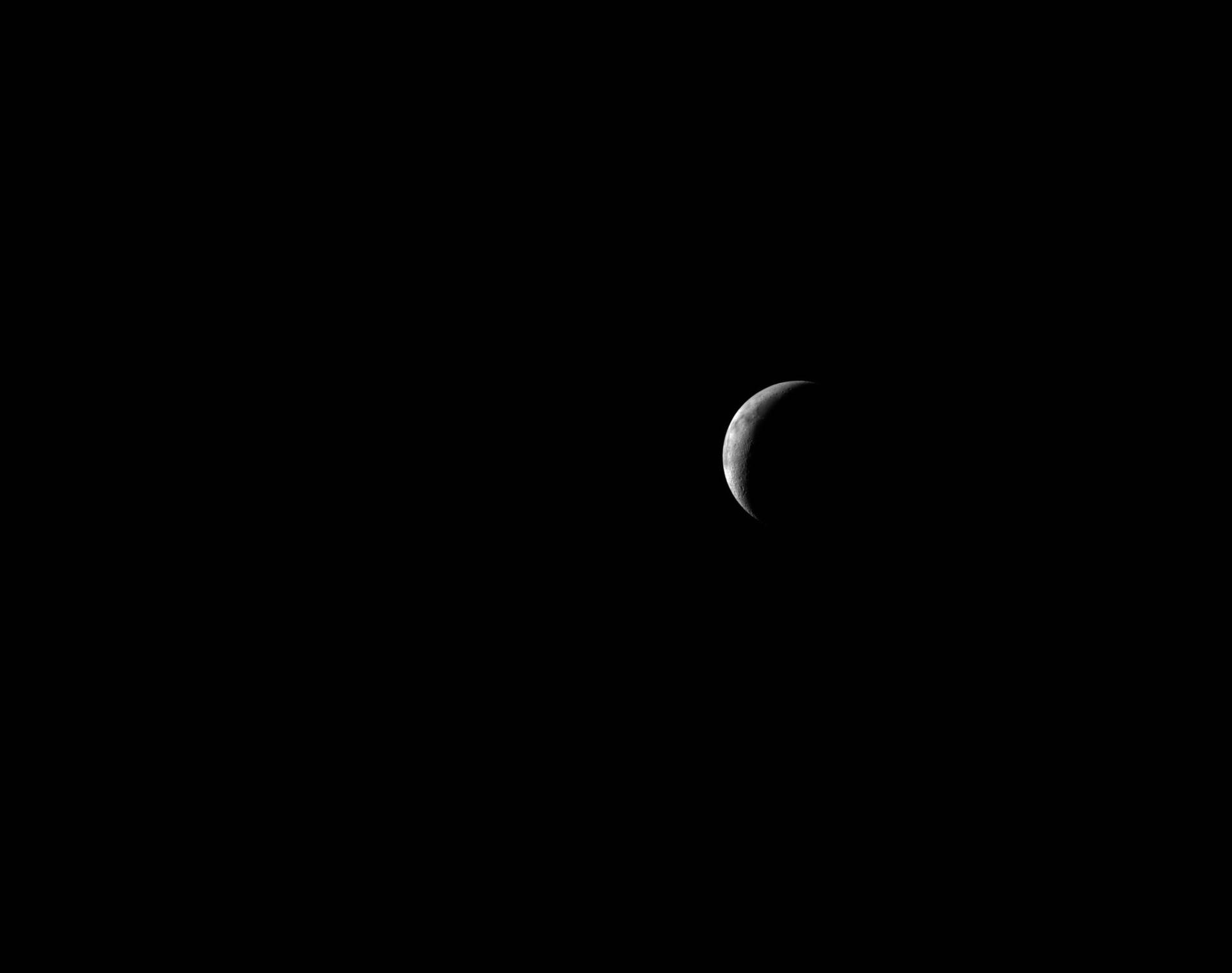
From 2nm Chips to 500km Orbit: Why Every Chip Design Verification Engineer Should Look Toward Space?
Mission #001 — From 2nm Chips to 500km Orbit: Why Every Chip Design Verification Engineer Should Look Toward Space?
On the ground, we pursue the physical limits of the 2nm microscopic world.
But when I look up at the Low Earth Orbit (LEO) at 500km, I realize that in that silent vacuum, a single high-energy particle piercing through the casing can paralyze billions of dollars worth of logic in an instant.
As chip verification engineers, what we guard is no longer just chip performance, but the first digital line of defense for humanity’s entry into interstellar civilization.
The 2nm Wall: Who are we fighting for?
In Taiwan’s most advanced laboratories, we dance with waveforms every day. To give the next generation of consumer electronics 5% more performance and 3% less power consumption, thousands of verification engineers meticulously craft at the 2nm scale, ensuring every line of RTL and every corner case converges perfectly.
This is one of the most magnificent high walls in the history of human technology.
However, when we spend 70% of our lives in repetitive commercial iterations, a psychic entropy unique to engineers arises within me:
“Could the pinnacle of the world’s strongest verification capability be destined only to make the next-gen game console start 0.1 seconds faster?”
This level of extreme precision deserves to be endowed with a grander mission.
The 500km Random Execution: A Survival Game in the Vacuum
When the perspective shifts from the ground to the 500km Low Earth Orbit (LEO), the rules of the game are completely rewritten.
There, there is no stable voltage supply—only violent temperature oscillations and ubiquitous cosmic radiation.
A single high-energy particle passing through the packaging acts like an unannounced “random execution,” capable of flipping register bits in microseconds.
On Earth, this might just be a phone crash; but in a vacuum, it means satellites worth hundreds of millions of dollars, carrying the lifeblood of human communication, could instantly paralyze, lose control, and ultimately become space debris that never returns.
In a place where the “reset button” is hundreds of kilometers away, the absence of logic cannot be patched by software updates.
In the “New Space” era, space is no longer the monopoly of nations but the battlefield of private pioneers. As hardware becomes lightweight and development cycles shorten, the mission of verification engineers undergoes a qualitative change: we are no longer just checking if functions meet specifications; we are building a “digital immune system” for logic.
This is the charm of aerospace verification:
“We must simulate disasters millions of kilometers away using code on the ground, and win this logic war before the disaster even occurs.”
Anxplore: A Pioneering Experiment from Tainan to Orbit
Thus, Anxplore was born.
This is not a mature business plan; it is a “pioneering experiment” originating from Tainan and looking toward orbit.
Carrying the rigorous DNA bestowed upon me by Taiwan’s semiconductor cluster, I decided to step into this unknown frontier of New Space.
I will record this exploration process from 0 to 1.
From technical details of interpreting ECSS aerospace standards to the logical resilience of simulating space radiation environments, I will transform this “Build in Public” journey into a series of experimental logs.
This is a voyage across scales. We set out from nanometer-scale chips, and our destination is the vast sea of stars.
I don’t guarantee that this path will be smooth sailing, but I guarantee that every exploration here is to drive a solid rivet for human interstellar civilization.
If you are interested in this pioneering experiment from semiconductors to space, you are welcome to follow my progress through the following ways:
- Explore my lab: All verification implementations will be synchronized on GitHub - Anxplore.
- Receive real-time transmissions: Deep thoughts and technical breakthroughs regarding aerospace verification will be continuously updated at www.anxplore.space.
- Communicate with me: Whether you are an aerospace veteran, a verification colleague, or simply want to chat about the starry sky, feel free to email contact@anxplore.space.
In a vacuum, only the logic you have verified can be trusted.
Let’s Anxplore the Stars.